

What we build
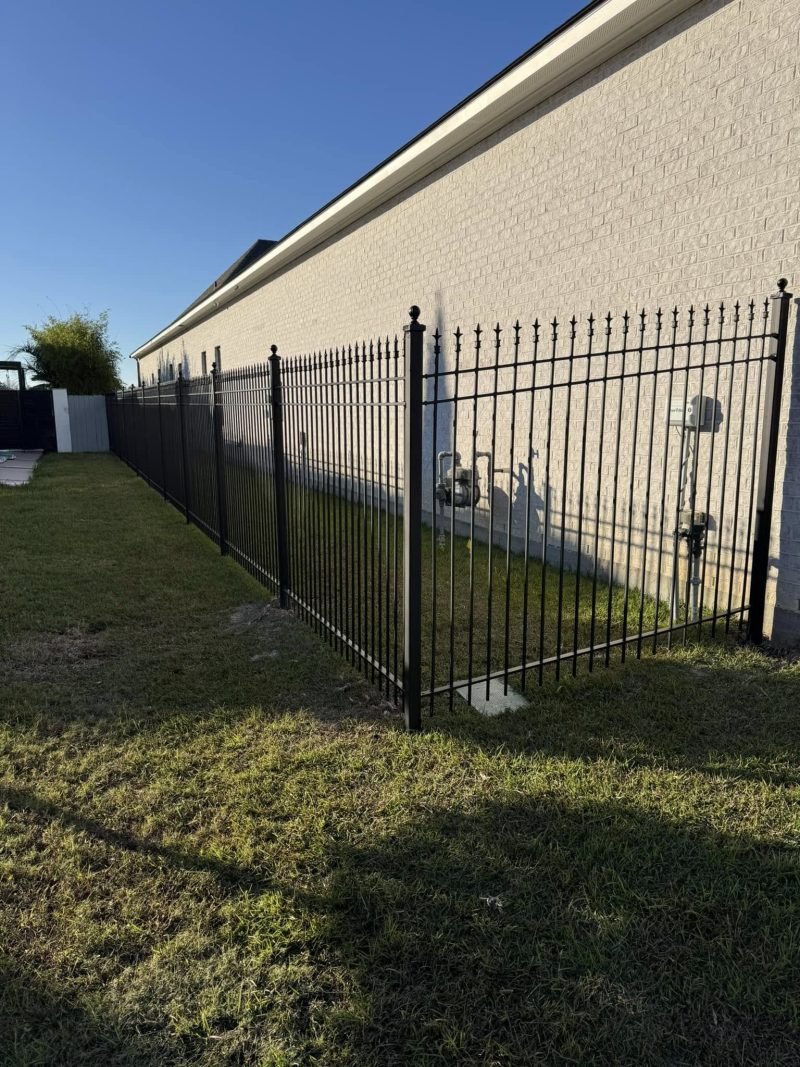
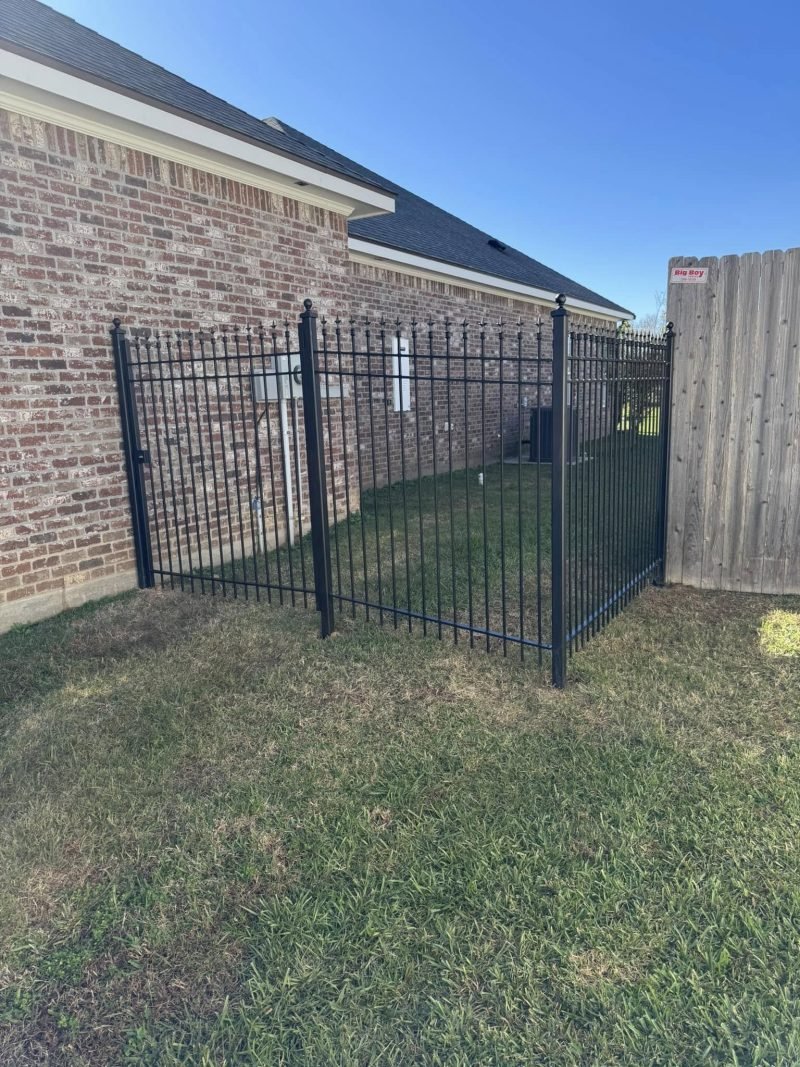
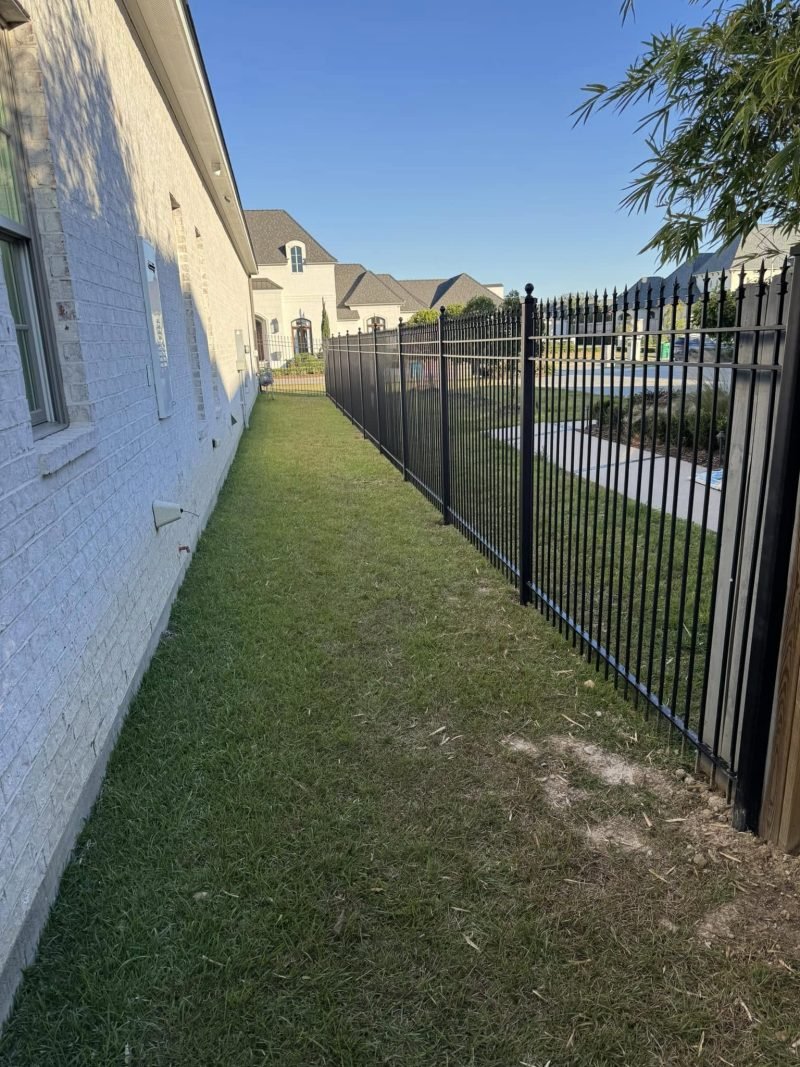
Most of the gate and fence work that comes through the shop falls into three groups. The first is black ornamental iron fencing along the side yards and backyards of brick homes, the kind that closes off a pool, a patio or a dog run without blocking the view. The second is arched double gates with scrollwork, built as a matched pair that meets in the middle over a driveway or a garden walk. The third is welded wire mesh security gates for shops, yards, utility areas and equipment pads, where strength matters more than looks.
Every one of these starts as plain steel bar, tube and plate. The scroll panels, finials and arched top rails are cut, bent and welded in the shop on a jig so each panel matches the next. Hinges, latches and drop rods are welded on before coating so nothing is bolted on as an afterthought.
- Ornamental picket fence panels and matching walk gates
- Arched and flat-top double driveway gates with or without scrollwork
- Welded wire mesh security gates and fence sections
- Pool and patio enclosures in steel or aluminum
- Replacement panels and gates to match an existing fence
Design choices in plain words
A fence is a set of repeated parts, so a few decisions early on shape the whole job. Here is what we will ask you about.
Picket spacing
Picket spacing is the gap between vertical bars. A tighter gap looks heavier and keeps small pets in. A wider gap is lighter and cheaper because it uses less material, but it lets more through. If the fence surrounds a pool, most local codes limit the gap so a child cannot pass through, and we build to that gap rather than to taste.
Finials and top rails
Finials are the pointed or rounded caps on top of each picket. Spear points, balls and fleur de lis shapes are all common around Acadiana. A fence can also run the pickets up through the top rail and leave them plain, which reads cleaner and modern. Flat-top fences with pickets hidden between two rails are the quietest option.
Scroll panels and arches
Scrollwork is bent flat bar welded into a frame. A pair of gates usually carries a scroll panel in the upper third of each leaf, with an arched top rail that rises toward the center. The scrolls are bent from a pattern so both leaves mirror each other. You can keep the scrollwork to the gates only and leave the fence runs plain, which is the most common choice for a brick home.
Height and panel length
Fence panels are usually built in sections that match the post spacing, so the pickets land evenly between posts. Taller fences need heavier rails and larger posts. We will tell you where the height starts to change the material size.
Posts and footings
A fence is only as straight as its posts. We set steel posts in concrete footings dug below the soft topsoil, and we size the post to the panel and to the gate it carries. A walk gate hangs fine on a standard line post. A pair of arched driveway gates is heavy, and the hinge posts need to be larger, deeper and sometimes braced back to the next post so the gate does not sag over time.
Lafayette soil holds water, and clay moves as it wets and dries. Deeper footings and a wider hole help the post stay plumb. Where a fence ties into a brick column or a house wall, we anchor a plate or a short bracket into the masonry rather than relying on the post alone.
Gate hardware gets its own attention. Weld-on hinges with grease fittings, a drop rod that lands in a sleeve set in the concrete, and a latch at a comfortable height are the basics. Automatic gate operators are installed by the operator company; we build the gate to the weight and swing they need and add the mounting tabs they ask for.
Coatings that hold up in South Louisiana humidity
Bare steel rusts fast in our climate. Humid air, afternoon rain and sprinklers running across the pickets all push moisture into every joint. The coating is what keeps an iron fence black instead of orange, so we treat it as part of the build and not a last step.
Before any coating goes on, welds are cleaned, mill scale and spatter are removed and the steel is wiped down. From there the common choices are a rust-inhibiting primer followed by an exterior enamel, or a powder coat applied by a coating shop. Powder coating gives a harder, more even finish; paint is easier to touch up after a scrape. Either one lasts far longer over clean, primed steel than over steel that went straight from the welder to the paint can.
For fences right on the coast or in constant spray from sprinklers, aluminum fencing avoids the rust question entirely. Aluminum does not carry the same look or weight as iron, but for a plain picket fence it is a sound choice. Our guide to aluminum and stainless outdoors goes deeper on which metal suits which spot.
Built in the shop, installed on site
Panels and gates are fabricated in the shop in Lafayette, where the jigs, the press brake and the CNC plasma table live. Cutting scroll patterns and decorative plate pieces on the CNC plasma table keeps every panel the same. Welding in the shop also means the work is done out of the weather, on a flat table, which is where straight fences come from.
Installation happens at your home or site with a mobile welding rig. Posts are set and checked for plumb, panels are welded or bracketed to the posts, gates are hung and adjusted, and any field welds are cleaned and touched up with the same coating used in the shop. The crew brings everything needed to finish in one trip whenever the site allows it.
Mobile welding installs in Lafayette and the surrounding Acadiana area, including Crowley, Abbeville and New Iberia. If your property is outside that range, ask; we may still be able to help.
Repairs to existing fences and gates
Not every job is a new fence. A gate that drags on the driveway, a hinge that has pulled loose from a rusted post, a panel bent by a vehicle or a section of pickets rotted through at the bottom rail can all be repaired on site. The mobile rig lets us cut out the bad section, weld in new steel and reset hinges without hauling the whole fence back to the shop.
When an older ornamental fence has a pattern we need to match, we measure the existing pickets, rails and finials and build the replacement section to the same spacing and profile. The new section is primed and painted to blend with what is there. For gates that have sagged, the usual fixes are a new hinge post, a diagonal brace welded into the frame or a larger hinge set, depending on what let go.
What to send for a gate or fence quote
You do not need drawings to get a price on a fence. A few things make the first conversation faster.
- Photos of the area, taken from a few angles, including where the fence will tie into the house or an existing fence
- Rough lengths of each run and where the gates go
- The height you want, or the reason for the fence (pool, pets, privacy, security) so we can suggest one
- A picture of a style you like, even a screenshot
- Whether the gate needs to work with an automatic opener
From there we can talk through picket spacing, finials and scrollwork, and whether steel or aluminum is the better fit for the spot. Read what to send for a fabrication quote for the full list, or see more finished work in the project gallery.
Ready to talk about a gate or fence? Request a quote and send a few photos, or call (337) 207-9506.
