

What we build
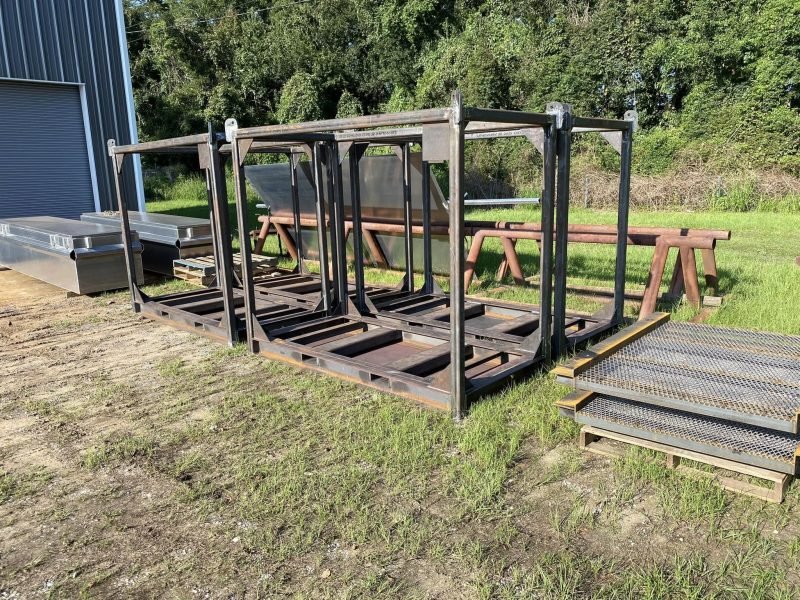
Skids and frames are the structural side of the shop: the steel that holds equipment up, keeps it level and lets it be moved as one piece. Most of this work comes from the oil and gas industry and from commercial construction, but the same frames show up under generators, pumps, compressors and tanks for anyone who needs them.
- Equipment skids with channel or beam runners, cross members and mounting pads for pumps, compressors and generators
- Valve and manifold stands that hold a header and its valves at working height
- Instrument skids with gauge boards, tubing supports and a grating walkway alongside
- Grating platforms and walkway frames with handrail, toe plate and stair or ladder access
- Tall steel rack frames for pipe, material and equipment storage
- Steel and stainless work tables and benches for shops, labs and food areas
- Bent tube frames, carts and stands
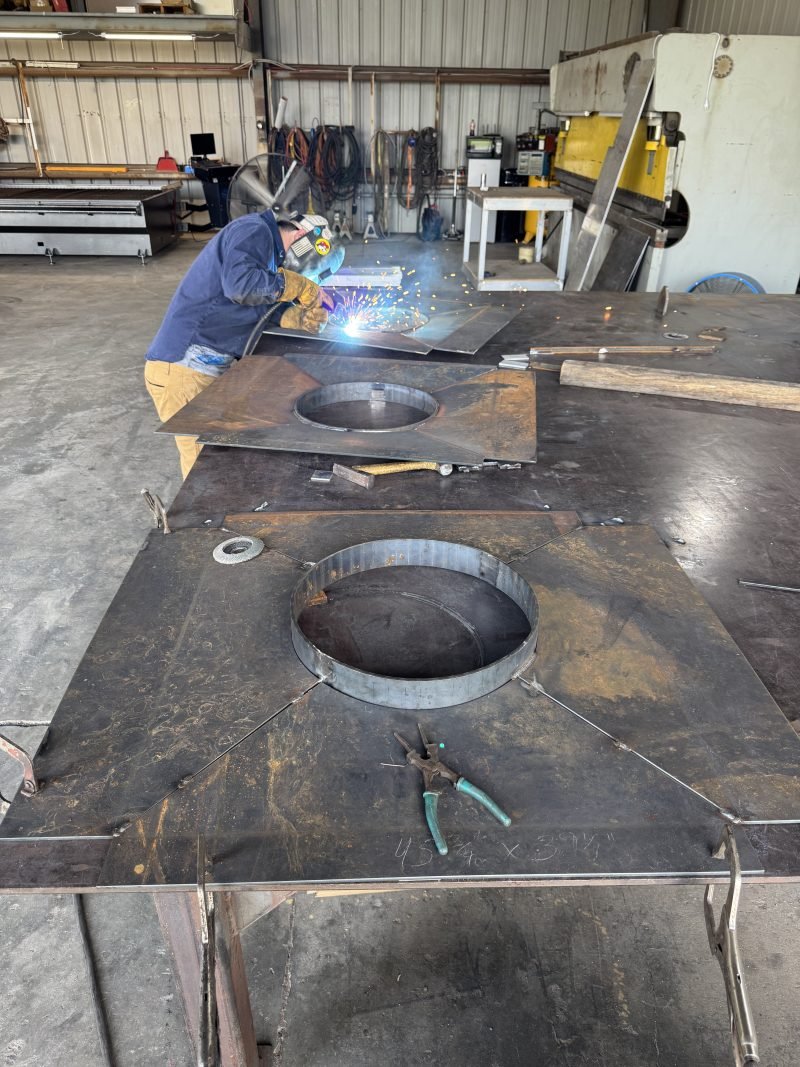
- Plasma-cut plate brackets, gussets, pipe shoes and pipe fixtures
Carbon steel is the usual material. Stainless frames and tables are built when the environment or the product calls for it, and aluminum frames when weight matters. Details on each metal are on the carbon steel, stainless and aluminum pages.
Reading the drawing
A skid or frame starts with a drawing, and the first thing we do is read all of it. The overall dimensions matter, but so do the details that are easy to miss: which dimensions are critical and which are reference, where the equipment mounting holes land, what the bolt pattern on the base plates is, which members are welded all around and which are stitch welded, what the coating note says and whether a part is to be shipped loose or installed.
If the drawing leaves something open, we ask before we cut. A mounting pad an inch off from the pump feet is a problem on site, not in the shop. We accept PDF drawings for most frame work and DXF or DWG files for anything that goes on the CNC plasma table, such as base plates, gussets and brackets. A sketch with dimensions is fine for simple tables and stands; we will draw it up and send it back for a look before building.

Square and flat fit-up
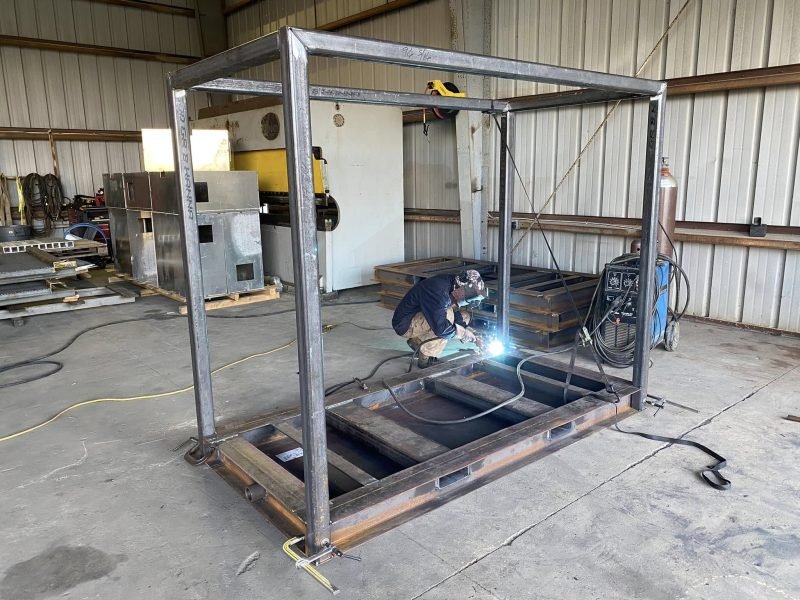
Equipment sits on the skid, so the skid has to be flat and square or the equipment will not. Fit-up is the work of getting every member in the right place before the final welds go on. Runners are laid on a flat table or leveled blocks, cross members are cut to length and squared by measuring the diagonals, and everything is tacked before it is welded out.
Welding pulls steel. Every weld shrinks as it cools and draws the frame toward the welded side, so welds are sequenced and balanced to keep the frame from bowing or twisting. After welding, mounting pads are checked for flatness and shimmed or machined if the drawing calls for a tight tolerance. Bolt holes are laid out from a common reference so the pattern matches the equipment, not just the drawing.
Tables get the same treatment. A work table that rocks on the floor or has a top with a crown in it is a nuisance every day it is used, so legs are cut to the same length on a stop and tops are welded with the shrinkage in mind.
Lifting points
A skid is built to be moved. Lifting lugs or padeyes are cut from plate on the plasma table and welded to the runners or the frame where the drawing shows them, placed so the skid hangs level with its equipment installed. The lug thickness, hole size and weld are sized to the load on the drawing. Where a skid will move by forklift, fork pockets are built into the runners.
Before anything ships, lifting points are checked and the skid is weighed or its weight is estimated from the material list so the crane or truck operator knows what they are picking.
Grating, handrail and access
Platforms and walkway skids carry people, so they get grating, handrail and toe plate. Bar grating is cut to fit the frame openings, banded at the cut edges and held down with clips or welded in place, depending on whether it will need to come up for maintenance. Handrail is built from pipe or tube with posts spaced to resist a lean, and toe plate runs along the open edges so a dropped tool stays on the platform. Stairs, ladders and ladder cages are built to match the platform height.
The heights and spacings of these parts come from the drawing and the standard the project follows. We build to those numbers; the engineer of record signs off on the design.
Coatings for the field
Steel going to an oil and gas site or an outdoor pad needs a coating that survives weather, spills and the occasional knock. After welding, the frame is cleaned of spatter and slag, sharp edges are broken and the surface is prepared for the coating the drawing specifies. That might be a shop primer for a frame that will be painted on site, a primer and enamel system, or a trip to a blasting and coating shop for a heavier industrial system or galvanizing. Lafayette humidity means bare steel starts to flash rust quickly, so coating follows welding closely rather than waiting around.
Stainless frames and tables are cleaned at the welds and left bare or brushed. Aluminum frames are usually left bare.
Delivery on flatbeds
Finished skids and frames leave the shop on a flatbed trailer. We load with the lifting points, strap and block the load, and deliver to your yard or site around Lafayette and across Acadiana. Tall rack frames and long walkway sections are built in pieces sized to ride on a standard trailer and bolt or weld together on site. If a frame needs to be assembled or welded in place, our mobile welding crew finishes it there.
What to send for a skid or frame quote
Send the drawing if you have one. If you do not, a sketch with overall dimensions, the equipment that will sit on it, the load it carries, the material and the coating you need is enough to start. Our guide to what to send for a quote lists the details that speed things up, and the project gallery shows finished skids, platforms and tables.
Have a skid, stand, platform or frame to build? Request a quote and attach your drawing, or call (337) 207-9506.
